Surging feed
Material releases in pulses instead of maintaining the required production rate.
Pneumatic resonance excitation can support material movement at conveyor transfer points, chutes and feeders. RVS is an excitation device integrated with the existing equipment, not a complete resonant vibrating conveyor. Engineering assessment checks structural response, attachment and whether the process needs continuous or intermittent excitation.
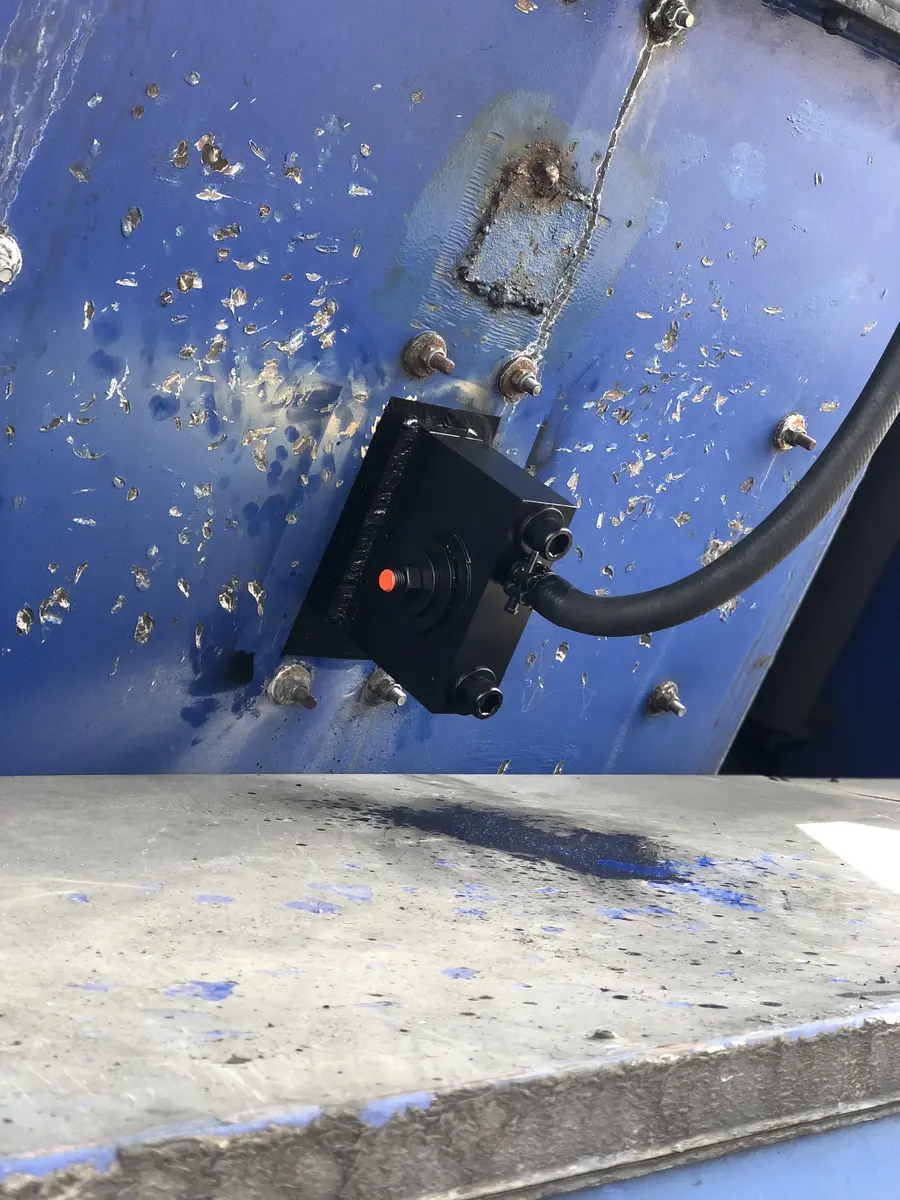
RVS acts through the feeder or pipe wall close to the location where powder or granular material slows and adheres.
Conveyors and feeders depend on predictable material behavior. Adhesion, compaction, moisture and particle variation can create surging, dead zones or complete stoppage. RESONATOR can introduce targeted high-frequency vibration at the point where flow loses stability.
Every installation begins with the actual material, equipment and measurable production problem—not a generic vibrator selection.
Material releases in pulses instead of maintaining the required production rate.
Geometry and surface conditions allow product to collect away from the active flow path.
Transitions between equipment become bottlenecks for sticky, fine or irregular material.
Frequency, force, mounting and timing are treated as one engineered operating system. The final configuration is validated under representative conditions.
Identify the precise point where material slows, bridges or changes direction.
Review conveyor type, feeder geometry, stiffness, isolation and mounting constraints.
Tune frequency and force to improve movement without destabilizing dosing or equipment.
Compare feed-rate stability, stoppages and material retention before and after tuning.
These are engineering objectives, not automatic guarantees. Performance depends on the material, structure, operating point and validation method.
Supports a more uniform material stream into downstream processing.
Targeted vibration can reduce recurring manual clearing at problem transfer points.
Pneumatic units can be positioned close to the process without large rotating assemblies.
Choose the energy-transfer route that fits the process environment and access point.
Direct mounting on suitable feeder bodies, trays, chutes and transfer structures.
Used selectively where direct internal excitation is compatible with the processed material.
Multi-point or synchronized layouts for long conveyors, complex transfers and controlled dosing.
Send the material, particle range, moisture, conveyor or feeder type, incline, target feed rate, current stoppage location, structure and available air supply.
Follow the material through your process. These application guides explain the role of excitation at the next stage and what to validate in a pilot.
RVS is an excitation device, not a complete conveyor. It can be engineered into a feeder, chute or conveyor structure to support material movement. The drive, supports, isolation and material load determine the response of the complete conveying system.
Record feed rate, accumulation, interruptions and transfer consistency before and after installation. Check that vibration does not create unwanted structural movement or segregation.