Compacted loads
Vibration, moisture and time can cause bulk material to consolidate during transport.
Compact vibration solutions for vehicle bodies, loading systems, unloading points and bulk-material transfer equipment.
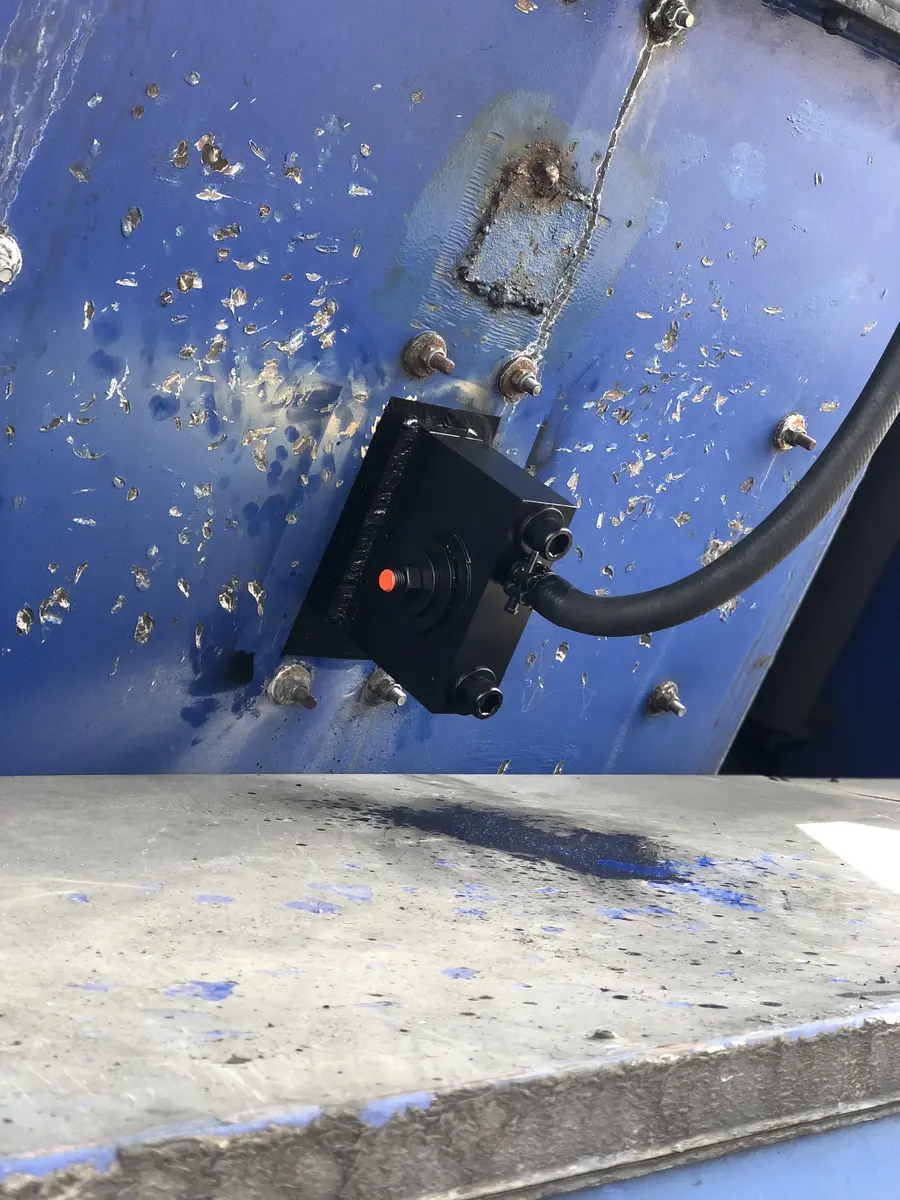
RVS introduces resonance close to the area where transported material settles, compacts or resists unloading.
Material that compacts during transport can resist unloading, remain on walls or release unpredictably. RESONATOR applies controlled pneumatic excitation to suitable structures and transfer points, helping operators reduce manual intervention and establish a more consistent unloading cycle.
Every installation begins with the actual material, equipment and measurable production problem—not a generic vibrator selection.
Vibration, moisture and time can cause bulk material to consolidate during transport.
Product left on walls or in corners reduces payload recovery and increases cleaning.
Sudden or uneven discharge can interrupt downstream handling and create safety concerns.
Frequency, force, mounting and timing are treated as one engineered operating system. The final configuration is validated under representative conditions.
Review where the material settles, compacts and stops during transport or unloading.
Confirm mounting surfaces, vehicle or equipment stiffness and safe load transfer.
Select an operating range that encourages controlled release without unnecessary structural motion.
Measure residual material, unloading time and repeatability across representative loads.
These are engineering objectives, not automatic guarantees. Performance depends on the material, structure, operating point and validation method.
Helps release material retained on suitable bins, bodies, chutes and transfer surfaces.
A controlled vibration step can reduce delays caused by compacted or reluctant material.
Supports safer, more repeatable handling by reducing the need for striking or scraping equipment.
Choose the energy-transfer route that fits the process environment and access point.
Compact mounting on fixed loading stations, transfer chutes and unloading structures.
Available for specialized process vessels where vibration must be introduced within the material.
Vehicle-specific, mobile or retrofit solutions with mounting and air-control integration.
Send the transported material, vehicle or equipment type, payload, moisture range, unloading cycle, available mounting points, air supply and retained-material pattern.