RVS 10™
Compact industrial resonance systemFor compact equipment, localized transfer points and installations where space and access are constrained.
Not another industrial vibrator. A different approach to industrial vibration. RVS™ introduces controlled, high-frequency, low-amplitude excitation directly into industrial structures and processes.
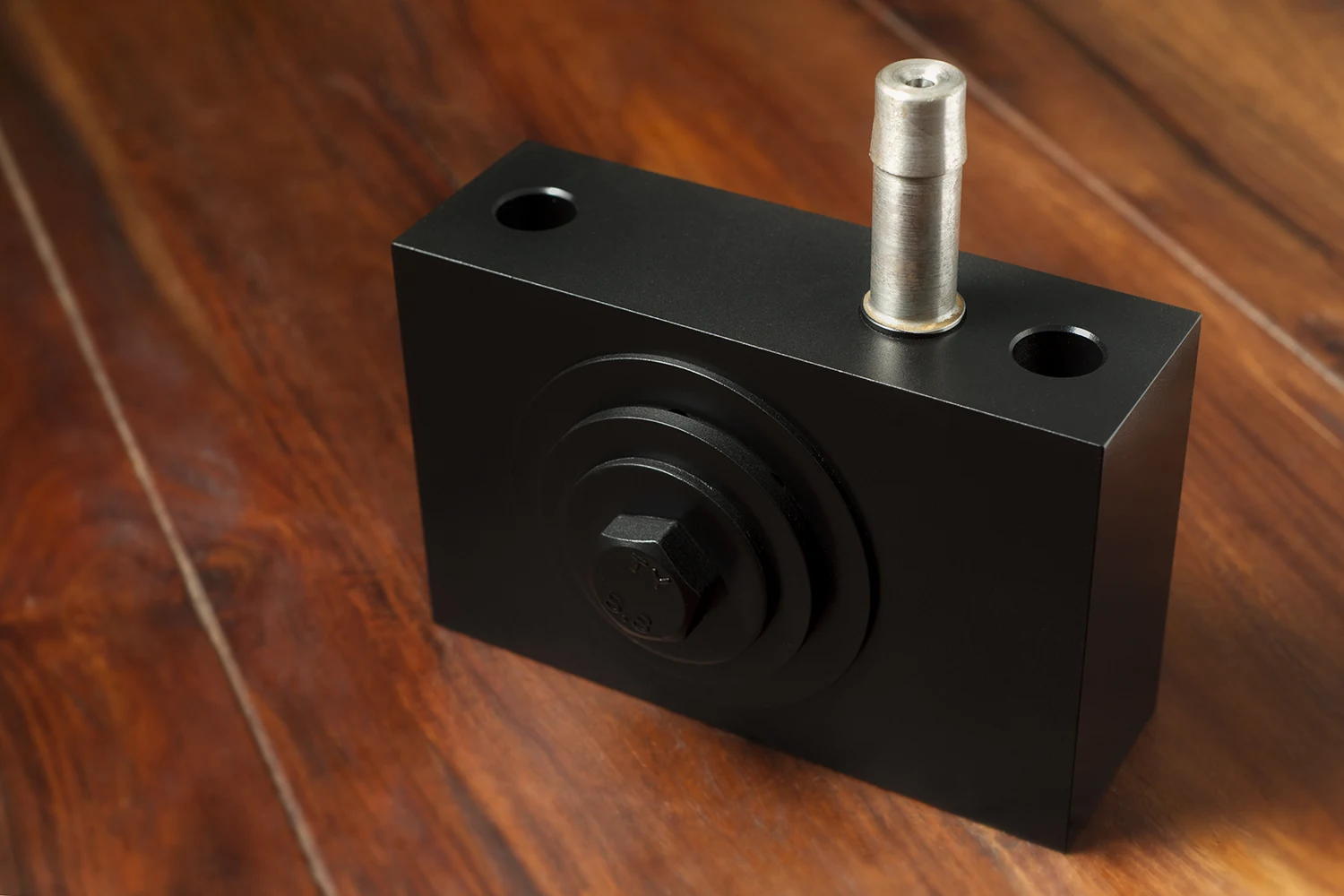
The public model names define compact, high-performance and maximum-performance product classes. Final force, pneumatic and integration data are confirmed in the technical proposal.
For compact equipment, localized transfer points and installations where space and access are constrained.
For demanding production equipment requiring a stronger system response and broader process influence.
For high-load structures and complex industrial processes subject to engineering review and validation.
RVS model numbers identify product classes. They are not presented as exact kN ratings; verified force data will be associated with each model only after updated technical testing confirms the ratings.
RVS™ is selected and configured as part of an application-specific Resonator solution.
Silos, hoppers, bins and difficult bulk discharge.
Explore solution ↗ 02 / CONSOLIDATIONConcrete moulds, precast production and vibration tables.
Explore solution ↗ 03 / PROCESSINGMills, minerals, powders and resonance-assisted processing.
Explore solution ↗ 04 / TRANSFERConveyors, chutes, feeders and transfer points.
Explore solution ↗ 05 / FOOD + POWDERSControlled handling of flour, sugar, grains and powders.
Explore solution ↗ 06 / ENGINEEREDSpecial installations, multiple units and OEM integration.
Explore product ↗Review public mounting principles and request registered access to model-specific operating instructions.
Follow the material through your process. These application guides explain the role of excitation at the next stage and what to validate in a pilot.
RVS means Resonance Vibrator Stationary. It is the stationary product family powered by ARA, Automatic Resonance Architecture. RVI identifies immersion products and RVC identifies custom configurations.
No. These numbers identify product classes, not confirmed kN ratings. Model-specific force and pneumatic data are confirmed in the technical proposal after appropriate testing.
Historical manufacturer-declared source values. They are not confirmed ratings for current RVS/RVI configurations. No direct mapping to modern model classes is established. Confirm the delivered unit, test conditions and installation before selection.
| Source model | Pressure · bar | Declared force · N | Frequency · Hz | Air · m³/min¹ |
|---|---|---|---|---|
| RFC 1 | 2 | 9 500 | 300 | 1.08 |
| RFC 1 | 4 | 44 500 | 650 | 1.5 |
| RFC 1 | 6 | 76 000 | 850 | 1.68 |
| RFC 2 | 2 | 24 140 | 300 | 1.68 |
| RFC 2 | 4 | 45 321 | 450 | 2.28 |
| RFC 2 | 6 | 113 338 | 650 | 2.7 |
| RFC 3 | 2 | 23 500 | 200 | 2.28 |
| RFC 3 | 4 | 94 250 | 400 | 3.42 |
| RFC 3 | 6 | 212 046 | 600 | 3.88 |
| Source model | Nominal L × D × H in source | Mass |
|---|---|---|
| RFC 1 | 160 × 50 × 183 mm | 7.77 kg |
| RFC 2 | 193 × 63 × 205 mm | 13.65 kg |
| RFC 3 | 235 × 80 × 235 mm | 25.1 kg |
Nominal dimensions are not the complete installed envelope. Covers, air fittings and brackets require the current installation drawing. The original drawings also distinguish body height from overall height.
¹ Air consumption is reproduced in source units; reference conditions and measurement method need confirmation. It is not a compressor-sizing guarantee.